Ginger Major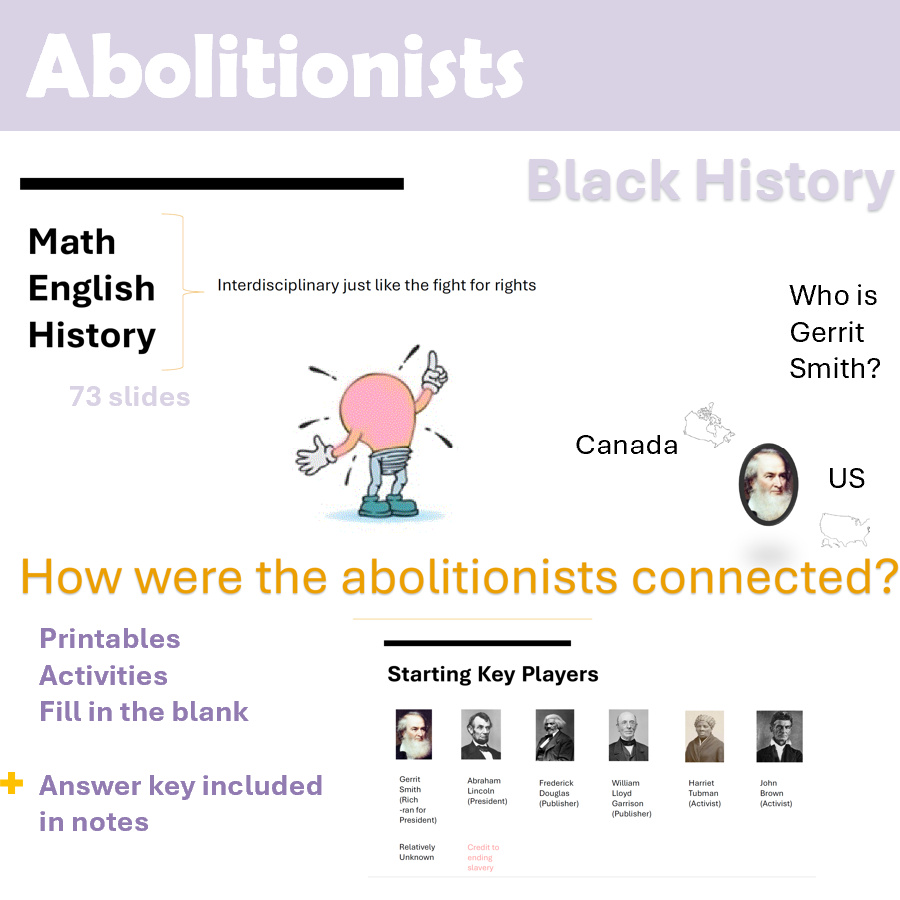
This research has been an extension of the work that I started for my Masters presented in a way for students. There are a lot of interesting details that are not in the mainstream and connected for you to help understand the abolition of slavery, black settlements, routes, and colonization issues.
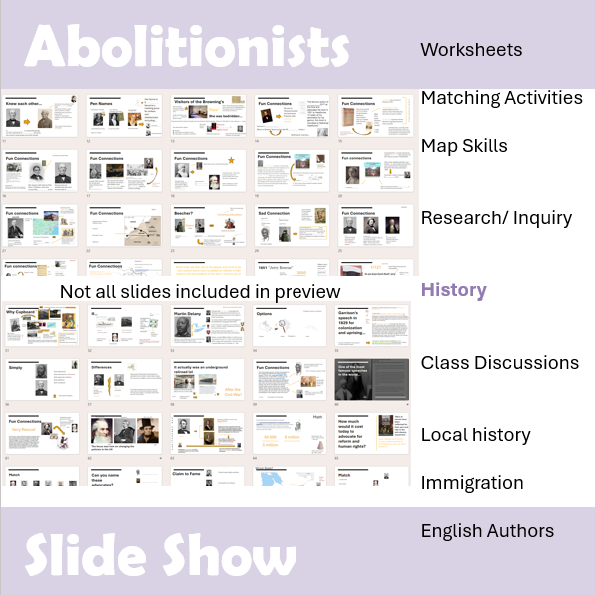
There is so much to tell and each clue that I found led to another connection that I have tried to illustrate for you in a series or slides that can be printed or used for activities with students.
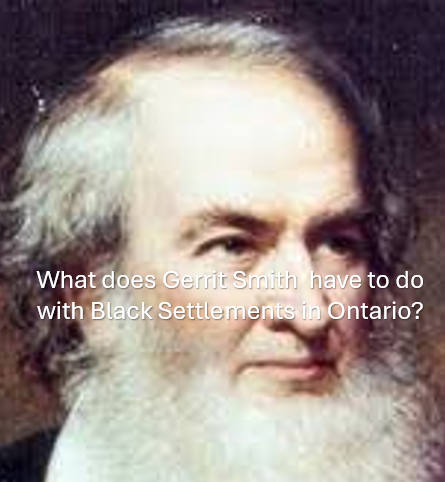
Where were the Black settlements in Ontario?
How did they travel to Ontario?
How are the Quakers connected to the settlements?
How did the abolitionists know each other?
Included is also evidence in the notes to help teachers.
The majority of this information is not in the mainstream and may help students learn to love to research. For example, the connection to three major settlements in what is now Canada is connected to both the Quakers and key abolitionists in the United States.
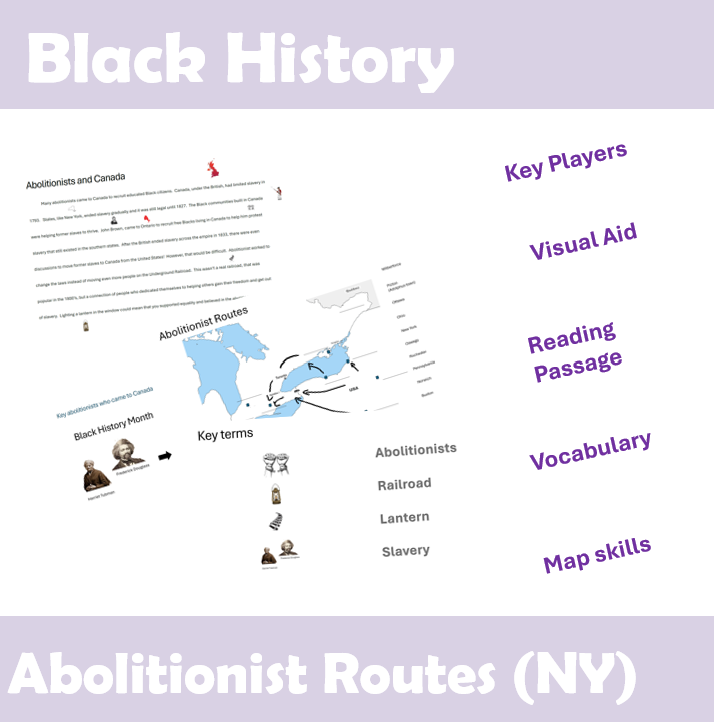
A separate map is also available that helps to outline these connections as the routes were not well publicized for obvious reasons for years. Due to the availability to share information over the internet it is now possible to figure out the routes taken to help people, most already free, emigrate to Canada during the colonization phase.
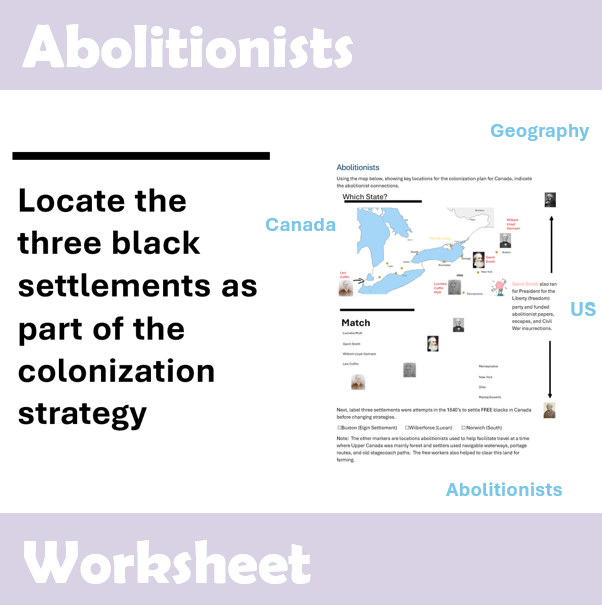
73 slides
The people named and living near these Black Settlements were often Quakers and known abolitionists. Thee Quakers attended yearly meetings and travelled to meet friends using an already existing network. It was not by accident that one of the largest anti-slavery meetings occurred next to a Quaker Community in New York. The religious acceptance also coincided with the extension of ideas that slavery needed to end. Abolitionists with funds and means started to promote change, not only with colonization, but also promoting ideas through publication.
The number of authors and publications (like Black Newspapers, articles, and pamphlets) on the plight of slavery during this period helped to shift public opinion. Abolitionists held meetings and lectures to spread the word. Books like Uncle Tom’s Cabin, became so popular that it was even banned in the South.
Since many of the Free persons who had moved to the new Black Settlements came from the same county it was easy through genealogy to trace back the routes and individuals involved to help determine the actual funding and routes used for abolitionist work.
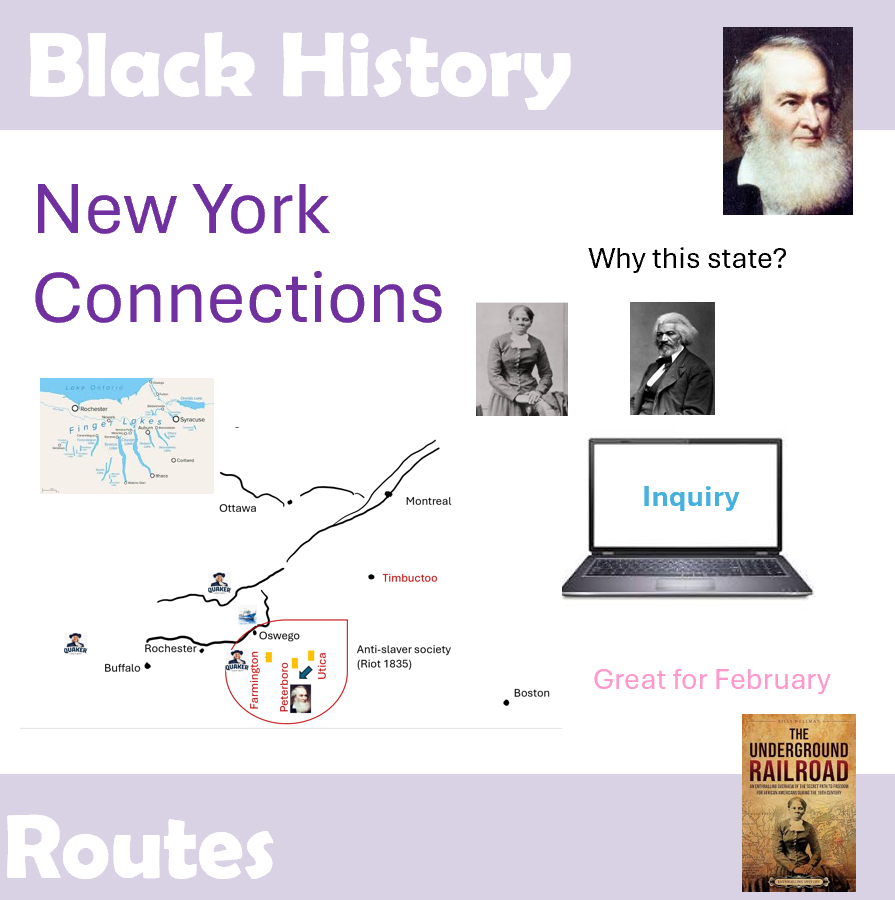
The funding of the Erie canal and Welland canal that opened around the same time that these new settlements were created also needs additional research. The extension of the canal for Oswego (a major port during this era) and the building of Gerrit Smith’s library was accepting of all people was a great clue. It took a little longer to find the captains and the routes across Lake Ontario. In addition, the railroads built at this time also provided alternatives to avoid the crossing of the Niagara river where there are a few stories of people disappearing due to this difficult journey. The geography of the Great lakes mean that different routes needed to be found.
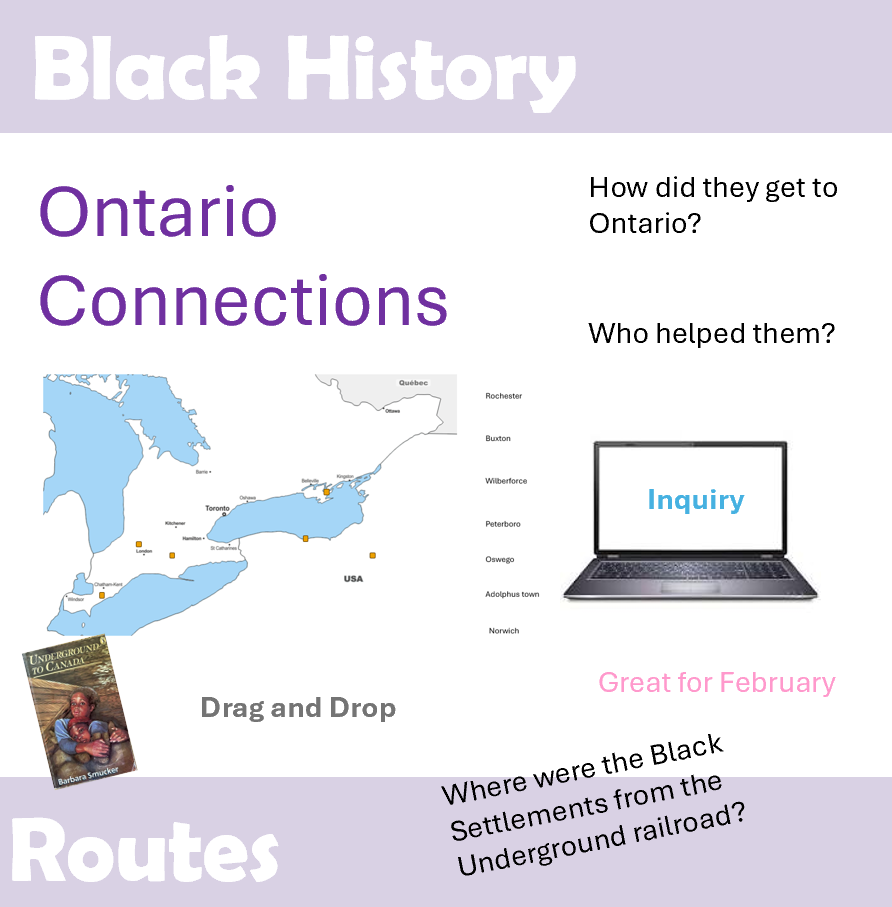
The name Frederick Stover was mentioned a few times concerning the purchase of the land for Black settlements in Ontario, but very little was available. There was a reference to helping people come up through North Carolina and how that happened through his former connections to New York or references to Ohio was incomplete. Levi Coffin (Ohio Route) had previously lived in North Carolina and had made it his life’s work to help others. The abolitionists that settled in Ontario still continued to travel to the US for yearly meetings. The movement of people through Quakers, abolitionists, or members of the anti-slavery societies who wanted to keep people safe from the draconian laws that were being passed that impacted the freedom of freed persons in the north were key in putting the paths together. They worked to try and move people, not always to Canada, but used the infrastructure that was being built, like steamships, to help moved people in a safer way. The movement of such a large number of people was a huge undertaking and so pressure was shifted to the political position in the United States.
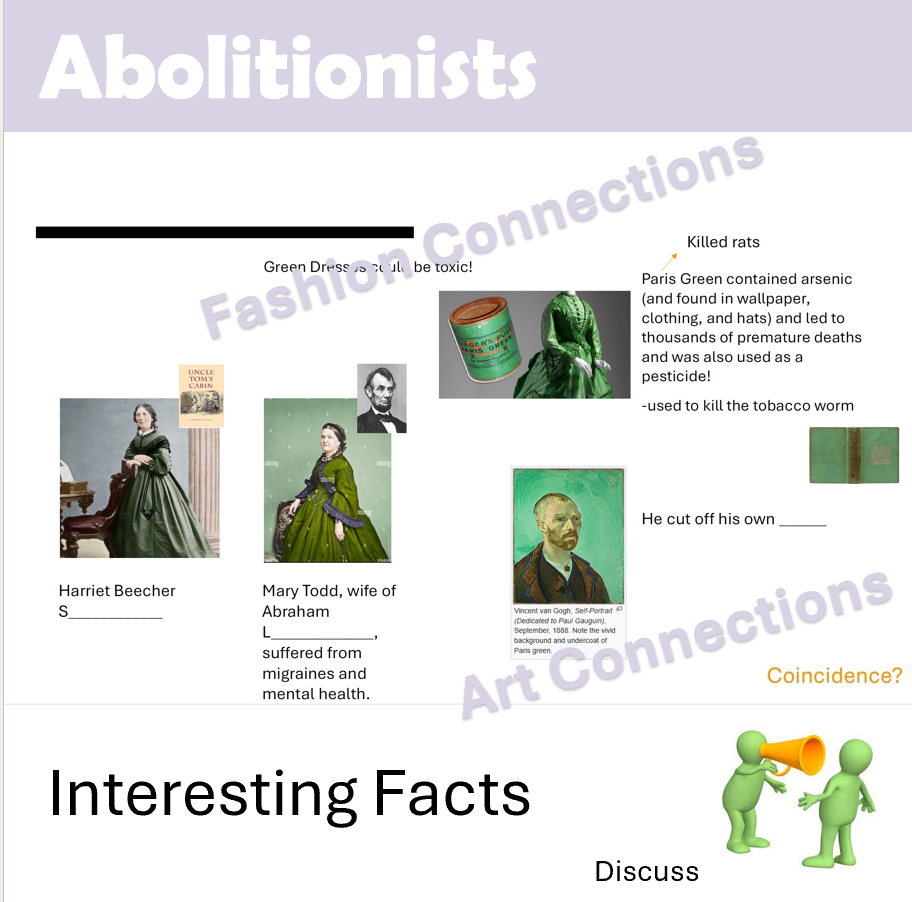
Included in the collection are interesting facts for students. They may notice that many key figures are wearing a dark green dress. The production of the this colour was actually dangerous and may explain some of the symptoms known in our history about these individuals using scientific knowledge today.
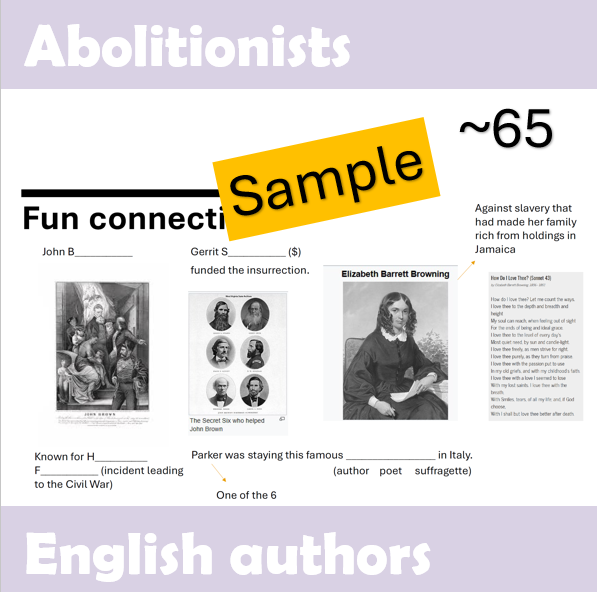
The connection between the funding of the abolitionist movement before the Civil War with people like Gerrit Smith supporting John Brown and his raid on Harper’s Ferry is also connected to Elizabeth Barret Browning (famous poet) who took in Parker, in Italy, who was one of the Secret Six. The involvement of all of these well known names in the planning and attempt to have slaves in the South rise up to help end slavery is a fascinating addition to your Black History month extensions or American History. John Brown had come to Canada and communities in Ohio like Ashtabula to try and recruit free black persons that were educated. (Note: Harriet Tubman was living in Canada at this time and it was hoped that her association would help with the recruitment.)
About The Author